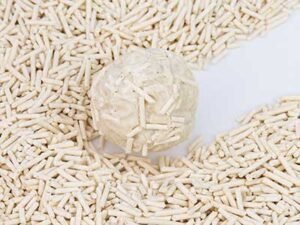
Building your own cat litter brand is no longer limited to large pet product companies. With the rise of natural, biodegradable, and low-dust litter products, private label tofu cat litter has become a practical entry point for pet retailers, importers, distributors, e-commerce sellers, and new pet brands.
Instead of building a factory from scratch, private labeling allows you to work with an experienced tofu cat litter manufacturer, choose a proven formula, customize the packaging, add your brand identity, and launch a finished product under your own label.
This guide explains how private label tofu cat litter works, what you can customize, how to choose the right supplier, and what steps you should follow to build a reliable own-brand cat litter product.
What Is Private Label Tofu Cat Litter?
Private label tofu cat litter is tofu-based cat litter produced by a manufacturer and sold under your own brand name. The factory handles production, quality control, and packaging, while you control the brand identity, product positioning, packaging design, and sales channel.
For example, a pet retailer may choose an existing tofu litter formula from a supplier, customize the scent and packaging, print its logo on the bag, and sell the product as its own brand.
Private label tofu litter is especially attractive because tofu cat litter is often positioned as:
- Plant-based and biodegradable
- Lightweight compared with traditional clay litter
- Low dust for indoor households
- Fast clumping for easier cleaning
- Suitable for eco-conscious pet product lines
- Flexible for retail packaging and bulk distribution
For businesses, the biggest advantage is speed. You can enter the cat litter category without investing in raw material sourcing, production equipment, formula testing, or factory management.
Why Choose Tofu Cat Litter for a Private Label Brand?
Tofu cat litter is a strong private label product because it fits several growing buyer expectations: cleaner ingredients, better odor control, low dust, convenient cleaning, and more sustainable disposal options.
1. It Matches Natural Pet Product Trends
Many pet owners are actively looking for alternatives to traditional clay or silica litter. A private label biodegradable cat litter gives your brand a clearer selling point, especially if your customers care about natural materials, low dust, and easier handling.
2. It Is Easy to Differentiate
Tofu litter gives brands multiple ways to create product variation. You can build product lines around scent, pellet size, clumping speed, packaging size, odor-control level, or mixed formulas.
Common private label tofu litter variations include:
- Original unscented tofu cat litter
- Green tea tofu cat litter
- Activated carbon tofu cat litter
- Mixed tofu and bentonite litter
- Fine pellet tofu litter
- 2.0 mm or 3.0 mm tofu litter
- Lightweight retail-pack tofu litter
3. It Works for Multiple Sales Channels
Private label tofu cat litter can be sold through pet shops, supermarkets, online marketplaces, subscription models, distributors, and veterinary or grooming chains.
A product designed for e-commerce may focus on lightweight packaging and compact carton size. A supermarket product may require stronger shelf impact, barcode labeling, and multilingual packaging. A distributor product may need stronger carton protection and stable pallet loading.
Who Should Start a Private Label Tofu Cat Litter Brand?
Private label tofu cat litter is suitable for several business types:
| Business Type | Why It Works |
|---|---|
| Pet product retailers | Add a higher-margin own-brand product |
| Importers | Build exclusive products for local markets |
| Wholesalers | Offer differentiated products to retail clients |
| E-commerce sellers | Launch a niche natural cat litter product |
| Supermarket chains | Create a private label pet care line |
| Pet brands | Expand from food, toys, or grooming into litter |
| Distributors | Secure stable supply with customized packaging |
Private labeling is also suitable for new brands, but only if they start with a clear market position, realistic MOQ, reliable packaging design, and a supplier that can provide stable production quality.
Private Label vs OEM vs Wholesale Cat Litter
Many buyers confuse private label, OEM, and wholesale cat litter. They are related, but they are not the same.
| Model | Best For | Customization Level | Speed to Market |
|---|---|---|---|
| Wholesale cat litter | Buyers who want ready-made products | Low | Fast |
| Private label cat litter | Brands that want logo and packaging customization | Medium | Fast to medium |
| OEM tofu cat litter | Brands that want custom formula, pellet, scent, or performance | High | Medium to longer |
Private label is usually the best starting point if you want to launch your own brand quickly. OEM is better if you want deeper product development, such as a unique formula, special clumping performance, or exclusive scent system.
What Can Be Customized in Private Label Tofu Cat Litter?
A good tofu cat litter supplier should offer more than simple logo printing. The best private label programs allow you to customize product performance, packaging, and brand presentation.
1. Formula
Depending on the factory’s capabilities, you may be able to customize:
- Soybean fiber or plant-fiber ratio
- Starch/binder level
- Pellet hardness
- Clumping speed
- Odor-control additives
- Activated carbon content
- Deodorizing agents
- Dust-control performance
- Water absorption level
For new brands, it is often safer to begin with a mature formula that has already passed internal testing. Custom formula development is possible, but it usually requires more samples, testing time, and higher MOQ.
2. Pellet Size
Pellet size affects tracking, clumping, texture, and cat acceptance.
Common options include:
- 1.5 mm–2.0 mm: softer texture, faster absorption, may track more easily
- 2.0 mm–3.0 mm: balanced option for most retail markets
- 3.0 mm+: lower tracking, stronger pellet feel, may be less preferred by some cats
The right pellet size depends on your market. For premium indoor cat owners, low tracking and low dust may matter more. For price-sensitive markets, cost and basic clumping performance may be the main priorities.
3. Scent
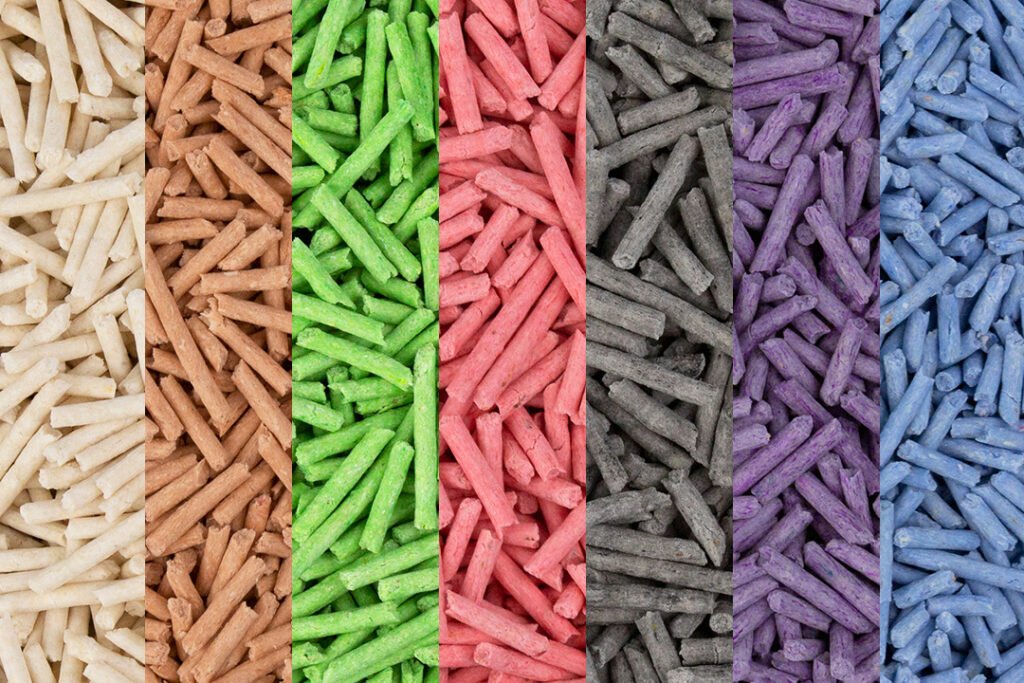
Common scent options include:
- Unscented
- Green tea
- Milk
- Peach
- Lavender-style fragrance
- Activated carbon deodorizing
- Custom fragrance
For many markets, unscented or mild scent is safer because some cats and owners dislike strong fragrance. If you sell to premium or health-conscious buyers, an unscented low-dust formula may be easier to position.
4. Packaging
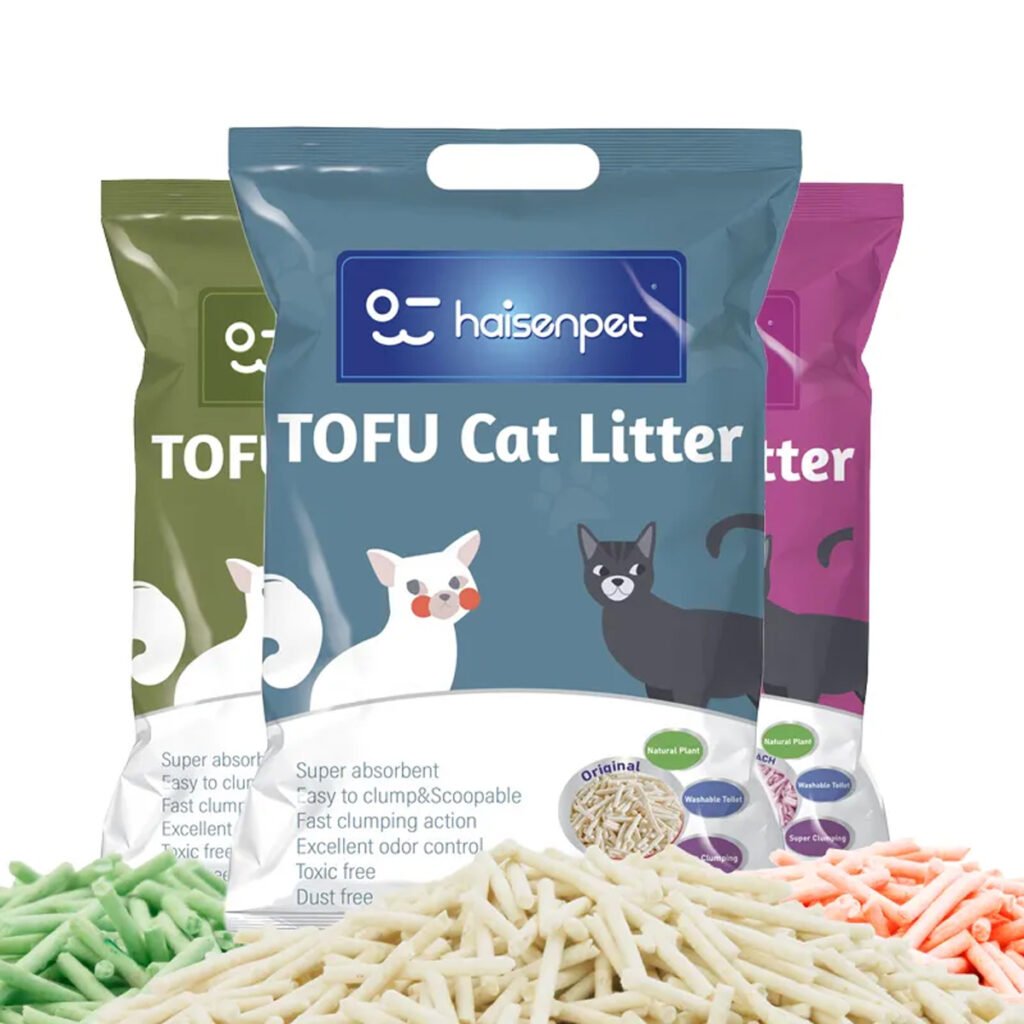
Custom packaging cat litter is one of the most important parts of private labeling. Your packaging must protect the product, communicate the selling points, and fit the sales channel.
Common packaging options include:
- 2.5 kg bag
- 5 kg bag
- 6 L bag
- 10 L bag
- Vacuum pack
- Stand-up pouch
- Handle bag
- Carton box
- Multi-pack e-commerce carton
Your packaging should include the brand name, product name, net weight or volume, usage instructions, storage instructions, barcode, batch code, manufacturer information, and market-specific compliance information.
5. Brand Design
Private label packaging can include:
- Logo
- Color system
- Product name
- Front-of-pack claims
- Icons
- Feeding/litter box usage guide
- Multilingual text
- QR code
- Website or distributor contact
- Retail barcode
For Google SEO and retail conversion, your product name should be clear and keyword-rich. For example:
Natural Tofu Cat Litter – Low Dust, Fast Clumping, Odor Control
How to Build Your Own Private Label Tofu Cat Litter Brand
Step 1: Define Your Market Position
Before contacting suppliers, decide what type of brand you want to build.
Ask yourself:
- Are you targeting premium, mid-range, or budget buyers?
- Will you sell online, offline, or both?
- Is your main selling point eco-friendly, low dust, odor control, price, or convenience?
- Do you need small retail bags or bulk distributor packaging?
- Will your customers prefer scented or unscented litter?
A clear brand position helps the supplier recommend the right formula and packaging.
Step 2: Choose the Product Specification
Your product specification should include:
- Formula type
- Pellet size
- Scent
- Clumping speed requirement
- Dust level requirement
- Moisture level target
- Packaging size
- Carton packing
- Pallet or container loading needs
- Label language
- Barcode and batch code requirements
Do not simply ask for the cheapest tofu litter. Low-cost formulas may affect clumping, odor control, dust level, and repeat purchase rate. For a private label brand, repeat purchase is more important than the lowest first order price.
Step 3: Request Samples
Samples are essential. Before placing a bulk order, test the product for:
- Clumping speed
- Clump hardness
- Dust level
- Odor control
- Water absorption
- Pellet breakage
- Tracking
- Cat acceptance
- Packaging strength
- Product smell after storage
If possible, test several formulas side by side. A small difference in pellet hardness, scent, or moisture can affect the customer experience.
Step 4: Confirm Packaging Design
Packaging design should be built around both branding and practical requirements.
Your package should answer these buyer questions quickly:
- What type of cat litter is it?
- Is it tofu cat litter?
- What are the main benefits?
- Is it low dust?
- Does it clump fast?
- Is it suitable for indoor cats?
- How much product is inside?
- How should consumers use it?
A strong front panel usually includes 3–5 clear selling points, not too many claims. Avoid overloading the bag with text.
Step 5: Check Supplier Capabilities
A reliable private label tofu cat litter supplier should be able to provide:
- Stable raw material sourcing
- Formula options
- Sample support
- Packaging customization
- Batch production
- Quality inspection
- Export documentation
- Carton and container loading support
- Clear communication on lead time and MOQ
You should also ask whether the supplier has experience with your target market. Packaging requirements, label language, and retail expectations may differ between North America, Europe, Southeast Asia, the Middle East, and other regions.
Step 6: Confirm MOQ, Lead Time, and Cost
Private label cat litter cost depends on formula, packaging material, order quantity, printing requirements, and shipping method.
Typical cost factors include:
- Raw material cost
- Formula complexity
- Fragrance or deodorizing additives
- Packaging size and material
- Printing plates or design setup
- Carton packaging
- Pallet loading
- Freight and destination charges
- Testing or certification needs
MOQ may be higher for fully customized packaging than for standard packaging with sticker labeling. If you are a new brand, ask whether the supplier can support a trial order with standard bags or semi-custom packaging.
Step 7: Start with a Test Launch
Instead of launching too many SKUs at once, start with one or two core products.
A practical first launch could include:
- One unscented tofu cat litter for premium buyers
- One scented tofu cat litter for retail shelves
- One larger pack for e-commerce or distributor sales
After launch, collect feedback on clumping, smell, dust, packaging damage, and repeat purchase. Use this feedback to improve the next production batch.
How Much Does Private Label Cat Litter Cost?
The cost of private label tofu cat litter depends on product formula, packaging type, order quantity, and shipping terms.
In general, you should budget for:
- Product unit cost
- Custom bag printing
- Carton packaging
- Sample shipping
- Design work
- Testing if required
- International freight
- Import duty and local taxes
- Storage and distribution
- Marketing and listing costs
For a new brand, the safest approach is to ask the supplier for several quotation options:
- Standard formula + standard packaging
- Standard formula + custom printed packaging
- Customized formula + custom printed packaging
- Bulk order for distributor packaging
This allows you to compare launch speed, cost, and brand differentiation.
What Packaging Options Are Available for Private Label Tofu Litter?
Private label tofu cat litter packaging can be customized based on retail, wholesale, or e-commerce needs.
Popular options include:
Retail Bags
Retail bags are suitable for pet shops, supermarkets, and online marketplaces. They usually focus on strong shelf appeal and clear selling points.
Vacuum Packs
Vacuum packaging can make the product more compact and easier to ship. It may also help reduce storage volume.
Carton Packaging
Cartons are useful for e-commerce and bulk sales because they protect the product during delivery.
Multi-Pack Formats
Multi-packs can increase average order value and work well for subscription models.
Bulk Packaging
Bulk packaging is suitable for importers, wholesalers, and distributors that need larger-volume supply.
Can You Customize the Tofu Cat Litter Formula?
Yes, many manufacturers can customize tofu cat litter formulas, but the level of customization depends on the supplier’s production capability.
You may be able to customize:
- Pellet size
- Scent
- Color
- Clumping speed
- Odor-control ingredient
- Dust level
- Pellet hardness
- Mixed formula ratio
- Packaging format
However, custom formula development usually requires more testing and a higher MOQ. If you are launching your first private label cat litter product, it is often better to start with a proven formula and customize the packaging first.
Once your sales volume becomes stable, you can develop a more unique formula for brand differentiation.
How Long Does Private Label Cat Litter Production Take?
Production time depends on packaging design, sample approval, material availability, and order quantity.
A typical private label process includes:
- Product requirement confirmation
- Sample selection and testing
- Packaging design
- Packaging material production
- Bulk production
- Quality inspection
- Packing and export preparation
- Shipping
Custom printed packaging usually adds more time than standard packaging. To avoid delays, prepare your logo, package text, barcode, and required label information before confirming the order.
How to Choose a Reliable Private Label Tofu Cat Litter Supplier
Choosing the right supplier is the most important decision in your private label project.
Use this checklist before placing an order:
Product Quality
- Does the litter clump quickly?
- Is the dust level acceptable?
- Does it control odor well?
- Are pellets strong enough during shipping?
- Is the moisture level stable?
- Does the product remain consistent between batches?
Factory Capability
- Can the factory handle private label packaging?
- Can it support different bag sizes?
- Does it have quality control procedures?
- Can it provide export support?
- Does it understand your target market?
Communication
- Does the supplier respond clearly?
- Can they explain formula differences?
- Do they provide realistic lead times?
- Are MOQ and payment terms transparent?
- Can they help with packaging details?
Brand Support
- Can they help with packaging layout?
- Can they provide product images or videos?
- Can they support barcode or batch printing?
- Can they recommend suitable formulas for your channel?
A reliable supplier should not only sell you cat litter. They should help you build a product that can be sold repeatedly in your market.
Common Mistakes When Launching a Private Label Cat Litter Brand
Mistake 1: Choosing Only by Price
Cheap litter may reduce your first-order cost, but poor clumping, high dust, or weak odor control can damage your brand quickly.
Mistake 2: Over-Customizing Too Early
New brands often want custom scent, custom color, custom bag, and custom formula at the same time. This increases cost and risk. Start simple, test the market, then upgrade.
Mistake 3: Ignoring Packaging Strength
Cat litter is heavy. Weak packaging can break during shipping, warehousing, or last-mile delivery. Always test bag strength and carton protection.
Mistake 4: Making Risky Flushable Claims
Some tofu litter products are marketed as flushable, but disposal rules vary by country, city, plumbing system, and septic conditions. Safer packaging language is often better than aggressive flushable claims.
Mistake 5: Not Testing with Real Cats
Laboratory performance matters, but real user experience matters more. Test the litter in real homes before scaling.
Private Label Tofu Cat Litter FAQ
How do I start a private label tofu cat litter brand?
Start by defining your target market, choosing a tofu litter formula, testing samples, confirming packaging design, and working with a reliable manufacturer that supports private label production. Begin with one or two core SKUs before expanding your product line.
How much does private label cat litter cost?
The cost depends on formula, packaging, MOQ, printing, shipping, and destination market requirements. Custom printed packaging and custom formulas usually cost more than standard formulas with simple branding.
What packaging options are available for private label tofu litter?
Common options include retail bags, vacuum packs, stand-up pouches, cartons, multi-packs, and bulk packaging. The best option depends on whether you sell through retail stores, e-commerce, distributors, or supermarkets.
Can I customize tofu cat litter formula?
Yes. Many suppliers can customize pellet size, scent, clumping speed, odor control, dust level, color, and packaging. However, deeper formula customization may require more testing time and a higher MOQ.
How long does private label cat litter production take?
Production time depends on sample approval, packaging design, packaging material production, order quantity, and shipping. Custom packaging usually requires more preparation time than standard packaging.
Is private label cat litter suitable for new brands?
Yes, private label cat litter can be suitable for new brands if they start with a proven formula, realistic MOQ, clear positioning, and reliable supplier support. New brands should avoid launching too many SKUs at once.
What is the difference between private label and OEM tofu cat litter?
Private label usually means selling a manufacturer’s existing or slightly adjusted product under your brand. OEM tofu cat litter usually involves deeper customization, such as formula development, pellet design, scent system, or exclusive product specifications.
Conclusion: Build a Cat Litter Brand with the Right Product and Supplier
Private label tofu cat litter gives pet businesses a practical way to enter the growing natural cat litter category. With the right formula, packaging, supplier, and market positioning, you can build an own-brand cat litter product without investing in factory production.
The key is to start with a clear product strategy. Choose a formula that matches your target customers, design packaging that communicates the product benefits, test samples carefully, and work with a supplier that understands both manufacturing and brand requirements.
A successful private label cat litter brand is not built by packaging alone. It is built through consistent product quality, reliable supply, strong positioning, and a product experience that makes customers buy again.