
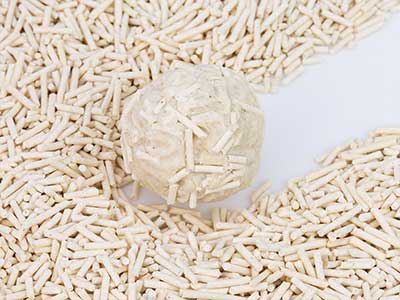
The cat litter market is becoming more competitive, and many pet product brands no longer want to sell generic products with limited differentiation. Retailers, importers, distributors, and online pet brands are looking for cat litter products that match their own customer groups, brand identity, price range, and sales channels.
This is where OEM tofu cat litter becomes valuable.
OEM tofu cat litter allows pet product brands and retailers to develop cat litter products based on specific requirements, rather than simply buying ready-made litter from a supplier. Through OEM production, you can customize the formula, pellet size, scent, packaging, performance, and branding to create a cat litter product that fits your market more precisely.
For companies that want to build a long-term pet care product line, OEM tofu cat litter is not just a sourcing option. It is a product development strategy.
What Is OEM Tofu Cat Litter?
OEM tofu cat litter is tofu-based cat litter manufactured by a factory according to a buyer’s product requirements. OEM stands for Original Equipment Manufacturer. In the cat litter industry, this usually means the manufacturer produces cat litter for your brand based on agreed specifications.
These specifications may include formula, raw material ratio, pellet diameter, scent, color, clumping speed, deodorizing performance, dust control, packaging size, bag design, carton packing, and labeling requirements.
Unlike ordinary wholesale cat litter, OEM tofu cat litter gives your brand more control over how the final product performs and how it appears to customers. Instead of accepting a standard product, you work with the manufacturer to create a product that reflects your brand strategy.
For example, a pet retailer may want a natural tofu cat litter with fine pellets, low dust, fast clumping, mild green tea scent, and modern packaging for urban cat owners. An OEM manufacturer can adjust the product details to match this goal.
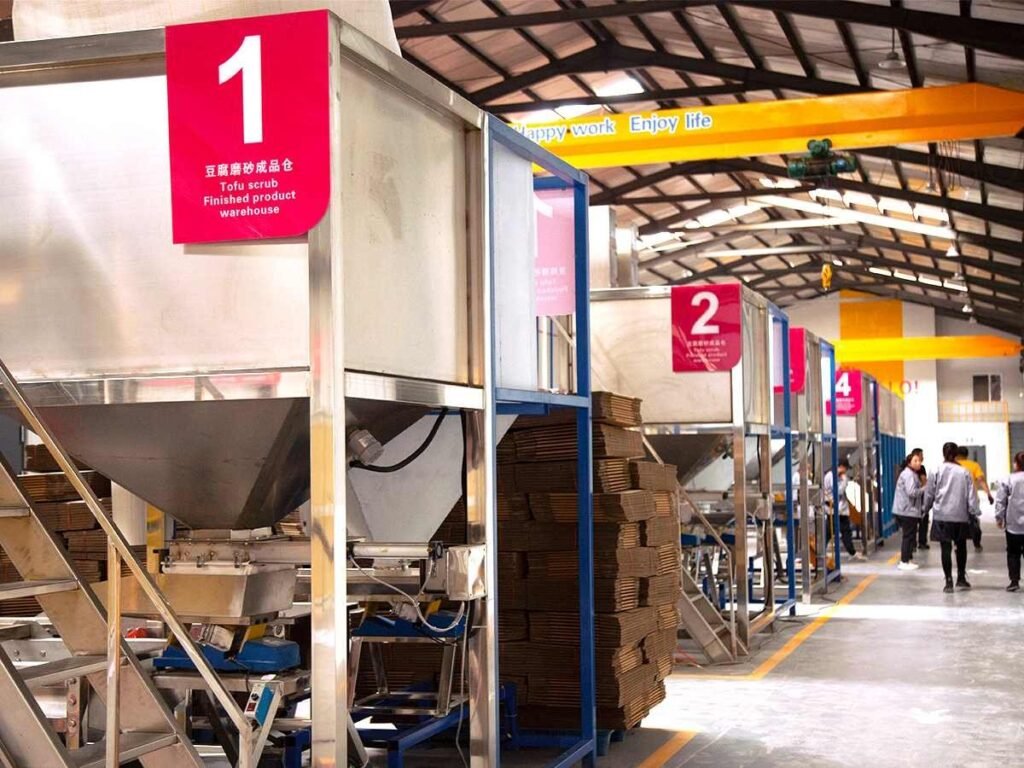
Why OEM Tofu Cat Litter Matters for Pet Brands
Many cat litter products look similar on the shelf. They use similar claims, similar packaging, and similar product descriptions. For pet product brands, this creates a problem: if the product is not different, customers will compare mainly by price.
OEM tofu cat litter helps brands avoid this problem by creating product differentiation.
With OEM service, your brand can develop a product around specific customer needs. You may focus on low tracking for apartment users, stronger odor control for multi-cat households, softer texture for sensitive cats, or compact packaging for e-commerce shipping.
This makes OEM tofu cat litter especially useful for brands that want to build repeat purchase, customer loyalty, and stronger market positioning.
Is OEM Tofu Cat Litter Suitable for Your Business?
OEM tofu cat litter is suitable for businesses that want more than basic resale.
It is especially suitable for:
- Pet product brands developing their own cat litter line
- Retailers creating exclusive store-brand products
- Importers building localized products for their market
- Distributors supplying customized products to retail clients
- E-commerce sellers creating differentiated cat litter SKUs
- Supermarket or chain-store buyers developing private pet care ranges
- Established pet brands expanding from food, toys, or grooming into litter
OEM may not be necessary for every buyer. If you only want to test the market quickly, standard wholesale or simple private label products may be enough. But if you already understand your market and want a product with stronger differentiation, OEM tofu cat litter is a better long-term option.
OEM Tofu Cat Litter vs Standard Cat Litter Sourcing
Standard sourcing usually focuses on finding an existing product, comparing prices, checking samples, and placing an order. OEM sourcing is different. It is closer to product development.
In standard sourcing, the main question is: “Which product can I buy?”
In OEM development, the main question is: “What product should my brand create?”
This difference changes the entire process. OEM requires clearer product planning, more detailed specifications, sample testing, packaging development, and quality control standards.
| Sourcing Type | Main Focus | Customization | Best For |
|---|---|---|---|
| Wholesale cat litter | Buying ready-made products | Low | Fast resale |
| Basic private label | Adding your brand to existing products | Medium | Quick brand launch |
| OEM tofu cat litter | Developing products based on your requirements | High | Long-term brand building |
OEM is not only about putting your logo on a bag. It is about creating a product system that supports your brand’s value.
Key OEM Customization Options
OEM tofu cat litter can be customized in several areas. The exact options depend on the manufacturer’s equipment, technical ability, and raw material supply.

1. Formula Design
The formula is the foundation of tofu cat litter performance. It affects absorption, clumping, dust level, pellet strength, odor control, and product stability.
In an OEM project, formula design may include adjustments to:
- Soybean fiber content
- Plant fiber composition
- Starch or binder ratio
- Moisture control
- Absorption speed
- Clump hardness
- Pellet strength
- Deodorizing ingredients
- Activated carbon content
- Fragrance level
- Dust control performance
A premium formula may focus on stronger clumping, lower dust, and better odor control. A mass-market formula may focus on cost balance, stable performance, and competitive pricing.
The right formula depends on your market position. A product designed for premium online sales should not use the same formula strategy as a budget supermarket product.
2. Pellet Diameter and Texture
Pellet size is one of the most visible product differences in tofu cat litter. It influences cat acceptance, tracking, absorption, and cleaning experience.
Smaller pellets usually provide faster absorption and a softer texture. They may be suitable for indoor cats and premium product positioning. However, very fine pellets may increase tracking.
Larger pellets can reduce tracking and create a cleaner area around the litter box, but some cats may need time to adapt. Medium pellets are often used when brands want a balanced product for general households.
In OEM tofu cat litter development, pellet size should be selected according to the target user scenario, not just factory availability.
3. Odor Control System
Odor control is one of the most important reasons customers repurchase cat litter. If the litter does not control odor well, attractive packaging will not save the product.
OEM odor-control options may include:
- Natural plant-based deodorizing ingredients
- Activated carbon
- Green tea scent
- Mild fragrance
- Unscented deodorizing formula
- Multi-cat odor-control formula
A common mistake is using strong fragrance to cover odor. This may create a strong first impression, but it can reduce customer satisfaction if the scent becomes unpleasant or if cats reject the litter.
A better OEM strategy is to combine absorption, clumping, and deodorizing ingredients to control odor at the source.
4. Dust Control
Low dust is a major selling point for tofu cat litter. Dust affects user experience, home cleanliness, and customer perception of quality.
For OEM tofu cat litter, dust control should be discussed as a measurable product requirement. The manufacturer should control raw material quality, pellet forming, drying process, screening, and packaging handling.
If your target customers are apartment owners, premium cat owners, or families with sensitive users, low dust should be one of your key specifications.
5. Clumping Performance
Clumping performance affects daily cleaning. Good tofu cat litter should form clumps quickly, hold together during scooping, and reduce product waste.
OEM clumping customization may involve:
- Faster liquid absorption
- Stronger clump structure
- Lower breakage during scooping
- Reduced sticking to the litter box
- Better balance between hardness and natural texture
Different sales channels may require different clumping standards. Online customers often leave detailed reviews, so clumping problems can quickly affect ratings and conversion. Retail customers may judge repeat purchase based on daily use experience.
6. Scent and Fragrance Strength
Scent can help define a product line, but it should be used carefully.
Common OEM scent options include:
- Unscented
- Green tea
- Milk
- Peach
- Lavender-style scent
- Charcoal deodorizing type
- Customized fragrance
For premium and natural brands, unscented or mild scent is often safer. For retail shelves, a light scent may improve product appeal. For multi-cat households, odor-control performance is more important than fragrance intensity.
Before choosing a scent, brands should test whether the fragrance remains stable after storage and whether cats accept it in real use.
7. Packaging Structure
Packaging is not only visual design. For cat litter, packaging is also a functional requirement.
OEM packaging decisions include:
- Bag size
- Bag material
- Sealing strength
- Handle design
- Vacuum packing
- Stand-up pouch format
- Carton protection
- Pallet loading
- E-commerce delivery safety
A beautiful bag that breaks during shipping is a failed packaging solution. For online sales, packaging durability should be tested before launch. For retail shelves, the package should be easy to display and easy for consumers to understand.
8. Labeling and Market Requirements
Different markets may require different label information. OEM buyers should prepare packaging content carefully before printing.
Common packaging information includes:
- Product name
- Brand name
- Main product benefits
- Net weight or volume
- Ingredients or material description
- Usage instructions
- Storage instructions
- Manufacturer or distributor information
- Barcode
- Batch number
- Production date
- Warning or disposal guidance
- Local language requirements
Claims should be clear and responsible. Avoid making promises that may create compliance or customer trust problems.
OEM Product Development Process
A successful OEM tofu cat litter project should follow a structured process. This helps reduce misunderstanding, control cost, and improve launch success.
Step 1: Create a Product Brief
Before asking for a quotation, prepare a product brief. This document explains what your brand wants to develop.
A good product brief may include:
- Target market
- Target customer
- Sales channel
- Product positioning
- Expected retail price
- Preferred formula type
- Pellet size
- Scent preference
- Packaging size
- Design direction
- Order quantity estimate
- Competitor references
- Required certifications or documents
The product brief helps the manufacturer understand your commercial goal, not just your technical request.
Step 2: Select a Product Direction
After reviewing your brief, the manufacturer may recommend several product directions.
For example:
- Low-dust premium tofu litter
- Fast-clumping tofu litter
- Activated carbon tofu litter
- Green tea tofu litter
- Mixed tofu and bentonite litter
- Lightweight e-commerce tofu litter
- Economy tofu litter for retail chains
At this stage, your brand should compare performance, cost, and positioning. The best product is not always the most expensive one. It is the product that best matches your customer and price level.
Step 3: Develop and Test Samples
Sample development is one of the most important parts of OEM tofu cat litter.
You should not approve a product only by appearance. Test the sample carefully in real use conditions.
Important testing points include:
- How fast the litter absorbs liquid
- Whether the clump breaks during scooping
- How much dust appears when pouring
- Whether the scent is too strong
- Whether the litter tracks outside the box
- Whether cats accept the texture
- Whether the product controls odor after repeated use
- Whether the bag protects the litter during transport
If the first sample is not ideal, provide clear feedback. For example, instead of saying “the quality is not good,” say “the clump breaks after 30 seconds of scooping” or “the fragrance is too strong after opening the bag.”
Clear feedback helps the manufacturer make useful adjustments.
Step 4: Confirm Technical Specifications
Once the sample is approved, the specifications should be confirmed in writing.
Important technical specifications may include:
| Specification Item | Why It Matters |
|---|---|
| Formula type | Defines product performance and cost |
| Pellet diameter | Affects texture, tracking, and absorption |
| Scent | Affects customer preference and cat acceptance |
| Dust level | Affects perceived quality |
| Moisture level | Affects storage stability |
| Clumping standard | Affects daily cleaning experience |
| Bag size | Affects retail and shipping |
| Carton packing | Affects logistics and protection |
| Label content | Affects market compliance and customer trust |
Clear specifications reduce the risk of inconsistent production.
Step 5: Design Packaging Around the Sales Channel
Packaging should be designed based on where the product will be sold.
For pet shops, the packaging should stand out on shelves and clearly communicate benefits.
For supermarkets, the design should be simple, clear, and easy to compare with competing products.
For e-commerce, the packaging should look good in product images and survive delivery.
For distributors, packaging should support efficient storage, carton loading, and wholesale handling.
The same OEM tofu cat litter formula may need different packaging strategies for different channels.
Step 6: Run a Pilot Order
If possible, start with a pilot order before scaling. A pilot order helps test production stability, packaging strength, shipping performance, and market feedback.
During the pilot stage, collect data from:
- Customer reviews
- Return reasons
- Packaging damage rate
- Repeat purchase rate
- Retailer feedback
- Distributor feedback
- Online conversion rate
- Common complaints
This information can guide improvements for the next batch.
Step 7: Scale the Product Line
After the first product performs well, your brand can expand the OEM tofu cat litter line.
Possible expansion directions include:
- Unscented version
- Green tea version
- Activated carbon version
- Multi-cat formula
- Low-tracking formula
- Economy pack
- Premium pack
- Subscription pack
- Retail chain pack
- Distributor bulk pack
Product line expansion should be based on market feedback, not guesswork.
How to Evaluate an OEM Tofu Cat Litter Manufacturer
Choosing the right manufacturer is critical. A low price is attractive, but it should not be the only selection standard.
Manufacturing Experience
The manufacturer should have experience producing tofu cat litter, not just general pet products. Tofu cat litter requires control over formula, moisture, pellet forming, drying, dust screening, and packaging.
Ask whether the factory has produced products for your target market or similar sales channels.
R&D Capability
OEM production requires product development ability. The supplier should be able to adjust formulas, create samples, explain technical differences, and improve product performance based on feedback.
If the supplier only offers fixed products with no adjustment options, it may not be suitable for OEM projects.
Quality Control System
Stable quality is essential for repeat purchase. Ask how the manufacturer controls:
- Raw material quality
- Moisture level
- Pellet hardness
- Dust level
- Clumping performance
- Odor-control consistency
- Bag sealing
- Weight accuracy
- Carton strength
A reliable manufacturer should have quality checks before, during, and after production.
Packaging Capability
OEM cat litter packaging requires both design support and technical execution. The manufacturer should understand bag materials, printing, sealing, carton packing, pallet loading, and transport protection.
Packaging problems can create customer complaints even when the litter itself is good.
Communication and Project Management
OEM projects include many details. Good communication prevents costly mistakes.
A professional supplier should confirm specifications clearly, provide realistic timelines, explain trade-offs, and respond to problems with practical solutions.
If communication is unclear during the sample stage, it may become more difficult during mass production.
Export and Logistics Support
For international buyers, export experience is important. The supplier should understand shipping terms, container loading, export documents, carton labeling, and destination market requirements.
Good logistics planning helps control cost and reduce product damage.
Questions to Ask Before Starting an OEM Project
Before choosing a supplier, ask practical questions such as:
- What tofu cat litter formulas do you currently produce?
- Can you adjust pellet size, scent, and clumping performance?
- What is the MOQ for OEM tofu cat litter?
- What packaging options are available?
- Can you support custom printed bags?
- How do you control dust level?
- How do you test clumping performance?
- Can you provide samples before bulk production?
- How long does sample development take?
- How long does mass production take?
- What quality checks are done before shipment?
- Can you support export packaging and container loading?
- What information is needed for packaging design?
- Can you help with product specification recommendations?
The answers will help you judge whether the supplier is only a seller or a true OEM manufacturing partner.
Cost Factors in OEM Tofu Cat Litter
OEM tofu cat litter cost is affected by both product and packaging decisions.
Main cost factors include:
- Raw material quality
- Formula complexity
- Pellet size
- Deodorizing ingredients
- Fragrance type
- Dust-control process
- Packaging material
- Printing method
- Bag size
- Carton packing
- MOQ
- Labor and production cost
- Freight and export cost
A highly customized product will usually cost more than a standard formula. However, higher cost may be acceptable if the product supports stronger positioning and better repeat purchase.
Brands should compare cost and value together. The cheapest OEM product is not always the most profitable product.
Common OEM Tofu Cat Litter Mistakes
Mistake 1: Starting Without a Clear Product Position
Some buyers ask for OEM tofu cat litter without knowing their target customer or price range. This makes it difficult to choose the right formula and packaging.
Before starting, define whether your product is premium, mid-range, economy, e-commerce focused, retail focused, or distributor focused.
Mistake 2: Copying Competitors Too Closely
Competitor research is useful, but copying competitors too closely can limit your brand. OEM should help your brand build a unique product, not simply imitate another product.
Use competitors as references, but create your own formula balance, packaging message, and brand identity.
Mistake 3: Ignoring Real User Testing
Lab tests are useful, but cat litter must work in daily life. Real cats, real owners, and real litter box conditions matter.
Before mass production, test the sample with actual users whenever possible.
Mistake 4: Choosing Packaging Only by Appearance
Packaging must look good, but it must also protect the product. Weak seals, thin bags, or poor cartons can cause leakage, broken pellets, and customer complaints.
Packaging strength should be part of your OEM standard.
Mistake 5: Not Confirming Specifications in Writing
Verbal agreements are not enough for OEM projects. Confirm formula, pellet size, scent, packaging, carton details, and quality standards in writing before production.
This protects both the buyer and the manufacturer.
Mistake 6: Launching Too Many Variants at Once
Too many SKUs can increase inventory pressure and make marketing more difficult. Start with the most promising formula and expand after collecting sales data.
OEM Tofu Cat Litter for Different Sales Channels
For Pet Retail Stores
Retail stores need packaging with strong shelf appeal and clear product benefits. The product should be easy for staff to explain and easy for customers to understand.
Important points include package design, bag size, price positioning, and visible benefits such as low dust, fast clumping, and odor control.
For E-Commerce Brands
E-commerce brands need strong product images, clear online descriptions, reliable packaging, and good review performance.
Since customers cannot touch the product before buying, the listing must explain product benefits clearly. Packaging must also survive shipping without leakage or damage.
For Supermarkets
Supermarket products need simple positioning, competitive pricing, stable supply, and clear packaging. Customers often make quick decisions, so the front of the package should communicate the main benefit immediately.
For Distributors and Importers
Distributors and importers need stable quality, flexible packaging options, good carton protection, and predictable supply. They may also require multilingual packaging and market-specific product information.
For Premium Pet Brands
Premium brands should focus on product experience, formula quality, packaging design, and brand storytelling. Low dust, odor control, natural materials, and user experience are especially important.
OEM Tofu Cat Litter FAQ
What is OEM tofu cat litter?
OEM tofu cat litter is tofu-based cat litter manufactured according to a brand’s specific requirements. It can include custom formula, pellet size, scent, packaging, clumping performance, and labeling.
How is OEM tofu cat litter different from private label tofu cat litter?
Private label tofu cat litter usually uses an existing formula with customized branding. OEM tofu cat litter allows deeper product customization, including formula adjustment, pellet design, odor-control system, packaging structure, and performance standards.
Can I create a unique tofu cat litter formula for my brand?
Yes. A qualified OEM tofu cat litter manufacturer can help adjust or develop a formula based on your target market, performance needs, price range, and packaging requirements.
What can be customized in OEM tofu cat litter?
Common customization options include formula, pellet size, scent, color, dust level, clumping speed, odor control, packaging size, bag design, carton packing, and label language.
What is the MOQ for OEM tofu cat litter?
MOQ depends on the manufacturer, formula complexity, packaging type, and printing requirements. Custom printed packaging and special formulas usually require higher MOQ than standard products.
How long does OEM tofu cat litter production take?
The timeline depends on sample development, packaging design, packaging production, bulk manufacturing, inspection, and shipping. OEM projects usually take longer than standard wholesale orders because more details must be confirmed.
Is OEM tofu cat litter suitable for new pet brands?
OEM tofu cat litter can be suitable for new brands with clear positioning and enough budget for product development. However, brands that are only testing the market may start with simpler customization before moving into full OEM development.
How do I choose an OEM tofu cat litter manufacturer?
Choose a manufacturer with tofu cat litter production experience, formula development ability, quality control systems, packaging support, export experience, and clear communication.
Can OEM tofu cat litter be sold online?
Yes. OEM tofu cat litter can be designed for e-commerce by using strong packaging, compact cartons, clear product positioning, and formulas that perform well in customer reviews.
What should I prepare before contacting an OEM supplier?
Prepare your target market, sales channel, expected product positioning, formula preference, scent preference, packaging size, order quantity estimate, label language, barcode needs, and competitor references.
Conclusion
OEM tofu cat litter is a powerful option for pet product brands and retailers that want to create differentiated cat litter products. It gives your brand control over formula, pellet size, scent, dust level, odor control, packaging, and market positioning.
Compared with standard sourcing, OEM requires more planning and testing. However, it also gives your brand more room to create a product that fits your customers and supports long-term growth.
To succeed with OEM tofu cat litter, start with a clear product brief, choose the right formula direction, test samples carefully, confirm specifications in writing, and work with a manufacturer that has real product development and quality control capability.
A good OEM tofu cat litter product should not only look good in packaging. It should solve real customer problems, perform consistently, and give cat owners a reason to buy again.
